
Key Takeaways:
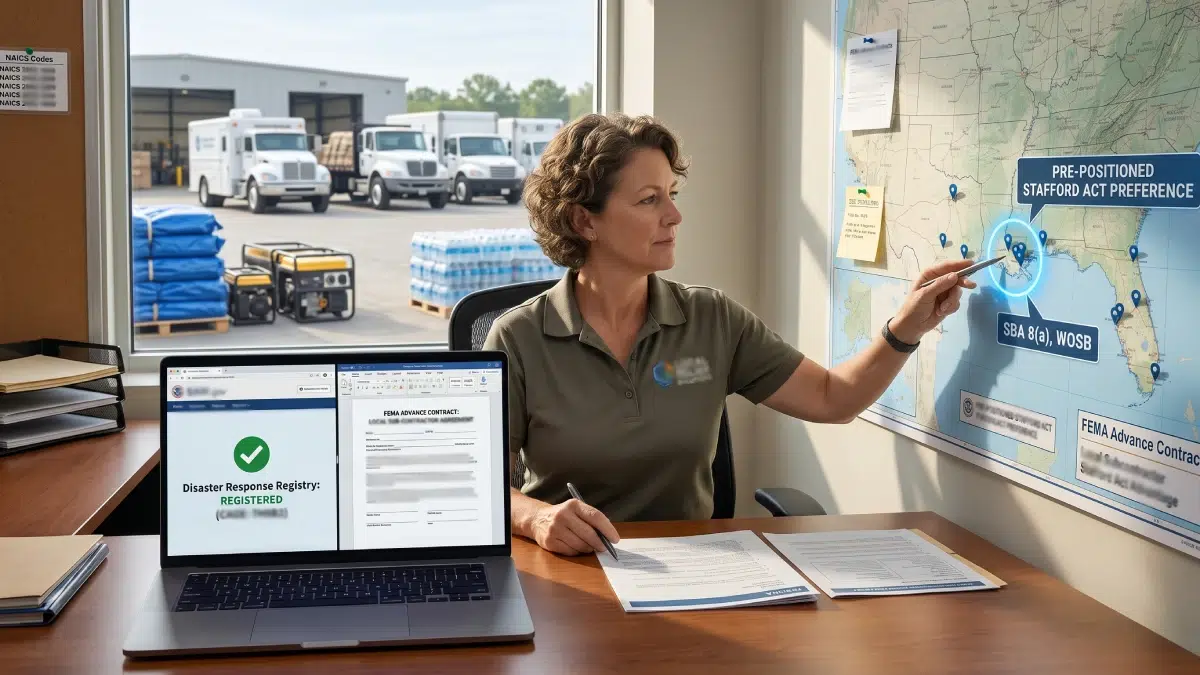
- The Reality: The most lucrative federal disaster response funds are secured through FEMA Advance Contracts negotiated months before a hurricane ever forms.
- The Subcontracting Advantage: Under the Stafford Act, large Prime contractors are legally required to give preference to local businesses, making subcontracting a highly profitable entry point.
- The Prerequisite: To be visible to FEMA buyers and Primes, your business must be actively registered in the SAM.gov Disaster Response Registry with a fully optimized DSBS profile highlighting your specific set-asides.
It is June 2026, and hurricane season is officially underway. As the news cycle fills with storm trackers and emergency prep warnings, thousands of small business owners are scrambling to find government contracting opportunities for disaster relief.
You might be thinking: “When the storm hits, I’ll bid on the cleanup and logistics contracts.”
At the Federal Contracting Center, we have a hard truth for you: If you wait until a hurricane makes landfall to look for FEMA work, you are already too late.
The federal government does not wait for a crisis to figure out who is delivering bottled water, removing debris, or providing emergency IT staffing. The billions of dollars in federal disaster relief are largely tied up in pre-negotiated agreements. The companies that win aren’t chasing storms—they are executing a proactive business strategy.
FCC Strategic Insight: If your first exposure to a disaster relief contract is a public bid after the storm has made landfall, you are already too late to compete against the pre-vetted Primes. The real money in disaster recovery is won in the calm before the storm, by companies who have positioned their federal profiles to be instantly deployable.
What Are FEMA Advance Contracts? (The Mechanics)
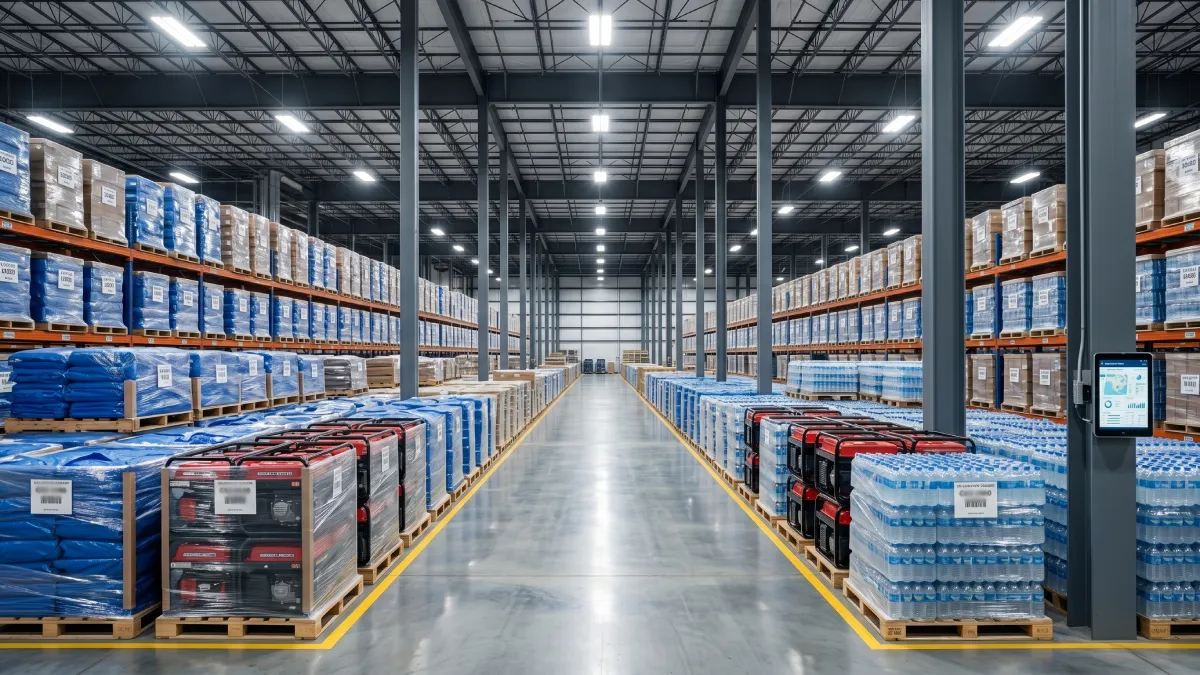
FEMA relies heavily on Advance Contracts. These are essentially pre-positioned, long-term contracts (often structured as Indefinite Delivery, Indefinite Quantity, or IDIQ) established well in advance of any disaster.
Through these contracts, FEMA secures pricing and capability commitments for critical supplies and services—everything from tarps, generators, and temporary housing to debris removal and emergency administrative staffing.
When a crisis occurs, FEMA simply issues a “Task Order” to the vendors already holding these Advance Contracts to deploy immediately. If your business isn’t vetted, registered, and pre-approved, you won’t get that initial phone call.
Unsure if your industry qualifies for Advance Contracts or disaster relief?
Click here to schedule a market research session with FCC today.
The Stafford Act: Your Local Subcontracting Advantage
If you don’t hold a massive Prime contract with FEMA, don’t panic. You have a built-in statutory advantage.
Under the Robert T. Stafford Disaster Relief and Emergency Assistance Act, federal agencies are required to give preference—to the extent feasible and practicable—to local organizations, firms, and individuals residing or doing business primarily in the area affected by the disaster.
This creates a massive bottleneck for out-of-state Prime contractors. They win the overarching Advance Contract, but when the storm hits a specific region, they are legally required by the government to give preference to local small businesses to fulfill the work.
The Strategy: You don’t always need to be the Prime. By optimizing your SAM.gov profile and entering the Disaster Response Registry, you become the highly compliant, local sub-contractor that Primes desperately need to fulfill their Stafford Act preference requirements.
The “Fast-Track” Set-Asides for Disaster Relief
When disaster strikes, Contracting Officers (COs) and Prime contractors need to move fast, but they still have statutory small business quotas to hit.
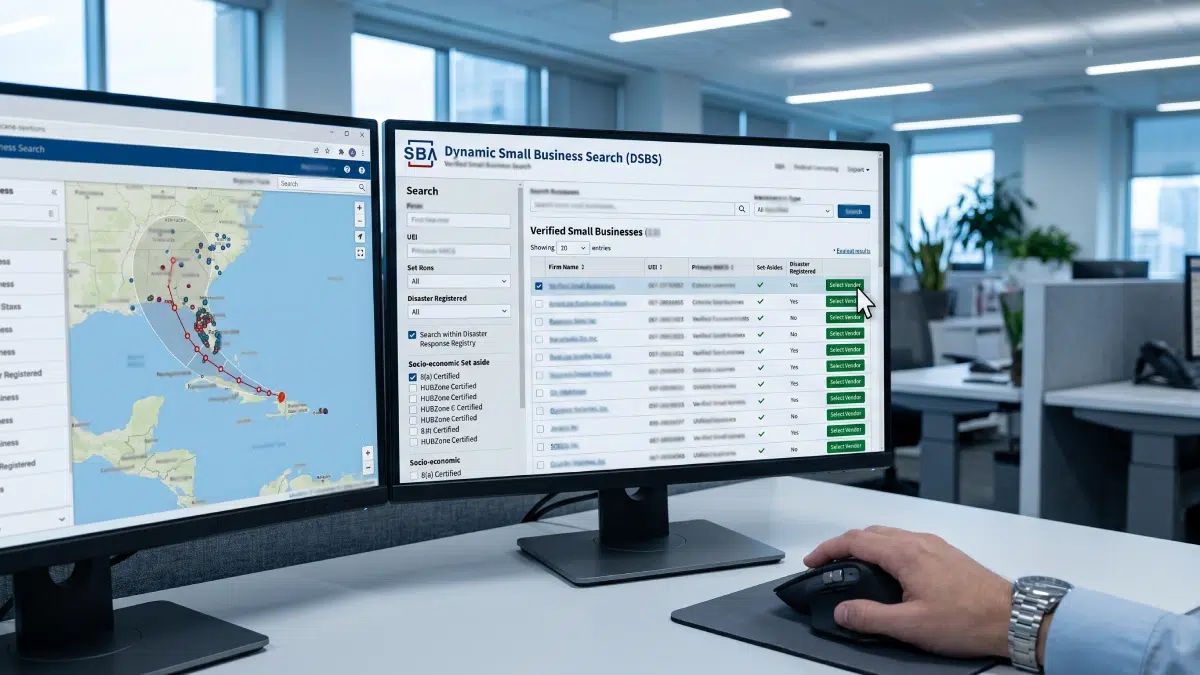
Having an official SBA Certification acts as a “fast-track” key. If a buyer needs to hit a specific socio-economic goal during a chaotic disaster response, they will instantly filter the Dynamic Small Business Search (DSBS) for certified firms.
| Certification | The Disaster Relief Benefit |
|---|---|
| 8(a) Business Dev. | Allows buyers to execute extremely fast, sole-source (no-bid) contracts for applicable, below-threshold awards during emergency declarations. |
| WOSB / EDWOSB | Rapid set-aside opportunities for critical heavy industries like debris removal, hauling, and construction. |
| SDVOSB | High trust and priority placement for security, logistics, and operations, particularly when FEMA coordinates with the VA or Defense agencies. |
| HUBZone | Massive advantage, as disaster zones frequently overlap with economically distressed geographic HUBZones, satisfying both local and federal goals. |
(Note: Self-certification is no longer accepted for most programs. You must be formally vetted and certified through the SBA to claim these advantages.)
FEMA Contracting FAQs
Q: Will I get emergency FEMA contracts if I am not in the SAM.gov Disaster Response Registry?
A: You will be practically invisible for immediate deployments. While you can technically bid on standard, long-term public solicitations, Contracting Officers and Prime vendors use the Disaster Response Registry specifically to execute rapid, unadvertised emergency awards and direct subcontracts. If you have not opted into this registry during your SAM.gov update, they will not call you when seconds count.
Q: Do I have to be a Prime contractor to make money during a disaster?
A: No. Subcontracting is often faster, more lucrative, and less bureaucratically demanding for small businesses. Primes are legally required to give preference to local sub-contractors under the Stafford Act.
Q: Can I apply for an Advance Contract while a hurricane is forming?
A: No. Advance Contracts are solicited and awarded through SAM.gov before disasters occur. While emergency spot-bidding sometimes happens after a storm, the largest and most reliable contracts are established months or years in advance.
Q: Will FEMA just call me if I am located in the disaster zone?
A: No. The government does not use Google to find vendors. Buyers will search the DSBS database. If your capability statement is weak or your profile lacks the correct NAICS and keyword data, they will call your competitor instead.
Stop Chasing Storms. Start Securing Contracts
Success in disaster contracting isn’t about watching the weather channel; it is about administrative readiness. If a Prime contractor searches for a local, secure partner and your SAM.gov profile is expired, or your DSBS narrative is blank, you will be passed over.
At the Federal Contracting Center, we help small businesses stop reacting and start preparing. We ensure your SAM.gov registration is flawlessly executed, explicitly opt your business into the Disaster Response Registry, and align your SBA certifications so federal buyers can find your business.

Don’t wait for the storm to hit to realize your federal paperwork is out of order. Call the Federal Contracting Center: (855) 700-5143.
Disclaimer: The Federal Contracting Center (FCC) is an independent, private B2G advisory firm and is not a government agency, nor is it affiliated with the Federal Emergency Management Agency (FEMA), the Small Business Administration (SBA), or any other federal entity. Please note that official federal registrations, including inclusion in the SAM.gov Disaster Response Registry, can be completed for free directly through official U.S. government portals. Our paid services provide specialized, “done-for-you” strategic readiness support, DSBS profile optimization, and administrative alignment to protect your business and position you for federal procurement success.
