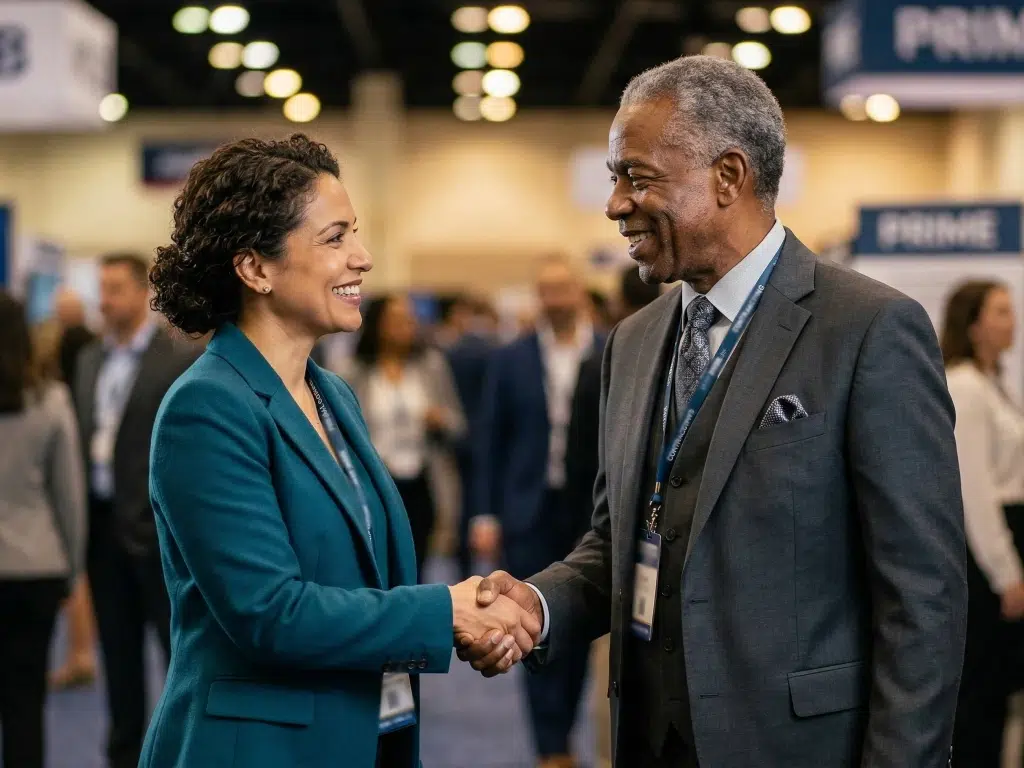

In the global economy, few sectors offer the scale and stability of the U.S. federal market. For decades, female-led firms have been driving innovation across industries ranging from advanced aerospace engineering to specialized healthcare logistics. However, technical excellence alone isn’t always enough to navigate the complex layers of government procurement. To truly scale, a business must combine its core capabilities with the right strategic tools.
The federal government has a statutory goal to award at least 5% of its prime contracting budget to Women-Owned Small Businesses (WOSBs). In a marketplace where annual spending exceeds $600 billion, this is a multi-billion-dollar opportunity. Yet, this mandate is rarely met, often due to a lack of award-ready firms in the system.
Securing a WOSB or EDWOSB certification is not about seeking a “handout” or receiving preferential treatment. Instead, as Federal Contracting Center founder Mike Major emphasizes, these programs are about opportunity. They are procurement mechanisms designed to ensure that capable, hardworking women have a seat at the table where they can compete and win based on their own merit.

A Competitive Arena: Set-Asides as a Growth Engine
A federal small business set-aside is a procurement program that reserves specific opportunities for a limited pool of companies. When a contract is “set aside” for women-owned businesses, it doesn’t mean the standards are lowered; it means the competition is refined.
This structure allows high-performing female contractors to showcase their expertise against a smaller group of similarly qualified peers rather than being forced to outbid global conglomerates with billion-dollar overheads. It provides the “opening” required for a small firm to demonstrate its ability to execute a mission-critical project. Once that door is open, the contractor must still prove their value through past performance, financial stability, and technical precision.
Decoding the Alphabet Soup: WBE, WOSB, and EDWOSB
 One of the most common points of confusion for female entrepreneurs is determining which “currency” to use in the marketplace. While all three certifications recognize female ownership, they serve vastly different buyers.
1. WBE (Women’s Business Enterprise):
This is primarily a private-sector and state-level certification. Organizations like WBENC certify firms so they can participate in supplier diversity programs for major corporations and local government agencies. There is often no specific size requirement for a WBE, and while it is excellent for corporate networking, it carries no legal weight in federal prime contracting.
2. WOSB (Women-Owned Small Business):
This is the federal standard. To qualify, a business must meet the SBA’s industry-specific size standards and be at least 51% owned and controlled by U.S. citizens who are women. Unlike the WBE, the WOSB certification is specifically designed to help firms bid on federal set-aside contracts.
3. EDWOSB (Economically Disadvantaged WOSB):
This is a subset of the WOSB program. To qualify, the female owners must meet specific financial thresholds regarding their personal net worth, adjusted gross income, and total assets. Holding an EDWOSB status is a major strategic advantage because it allows you to bid on both standard WOSB set-asides and the even more exclusive pool of EDWOSB-only contracts.
The Requirements: Defining Ownership and Control
To protect the integrity of these programs, the SBA maintains rigorous standards for what constitutes “ownership” and “control.”
- Ownership: The 51% ownership must be unconditional and direct. This means the woman owner cannot have her ownership restricted by side agreements or complicated vesting schedules.
- Control: The woman must manage the daily operations and make the long-term strategic decisions for the firm. She must also hold the highest officer position in the company and have the managerial experience necessary to run the business. While she doesn’t necessarily need to be the person holding a specific technical license (like an electrician’s license), she must have ultimate supervisory control over those who do.
The Financial Thresholds of EDWOSB
For businesses aiming for the Economically Disadvantaged status, the 2026 financial criteria are strictly enforced. These caps ensure the program serves firms that truly need the competitive boost to scale:
- Personal Net Worth: Must be less than $850,000 (this excludes the owner’s primary residence and the equity in the business itself).
- Adjusted Gross Income (AGI): A three-year average of $400,000 or less per year.
- Total Assets: The fair market value of all assets (including primary residence and business) must be $6.5 million or less.
The FCC Approach: Why Market Research Comes First
At the Federal Contracting Center, we do not believe in pursuing a certification just for the sake of having a logo on your website. Every certification requires an investment of time, documentation, and maintenance. Before we guide a client through the application process, we conduct thorough market research to determine the viability of the certification for their specific industry.
We look at your primary NAICS codes to see how much federal money is currently being awarded to WOSBs in your sector. If agencies in your field aren’t using the WOSB vehicle to buy, we might recommend focusing your energy on a GSA Schedule or other prime contracting strategies instead. Our goal is to ensure that your certification becomes a revenue-generating asset, not just an administrative burden.
Positioning for 2026: Beyond the Paperwork
Securing the certificate is the beginning, not the end, of the process. To win in 2026, your business must be “award-ready” across all digital and physical fronts:
- SAM.gov & DSBS: Your Dynamic Small Business Search (DSBS) profile is the search engine federal buyers use to find you. It must be keyword-optimized and perfectly aligned with the technical strengths highlighted in your certification.
- The “Zero-Friction” Profile: Any discrepancy between your certification documents and your SAM registration can cause a “validation failure,” freezing your ability to receive payments or bid on new work.
- Strategic Networking: Use your status to build relationships with Small Business Professionals (SBPs) and Prime Contractors who are looking for reliable WOSB partners to meet their subcontracting goals.
Frequently Asked Questions | FAQs
Q.1. Is self-certification still an option for the WOSB program?
A.1. No. As of a few years ago, the SBA eliminated the option for businesses to self-certify for the WOSB and EDWOSB programs. You must now go through a formal certification process either directly through the SBA or via an approved third-party certifier. This change was implemented to reduce fraud and increase the confidence of federal agencies in the legitimacy of women-owned firms.
Q.2. How long does the WOSB certification last?
A.2. Once granted, the certification is generally valid for three years, but you are required to provide an annual attestation to the SBA that your ownership and control status has not changed. Every three years, you must undergo a more thorough recertification process.
Q.3. Can I use my WBE certificate to get federal contracts?
A.3. Not directly. While a WBE certificate is highly respected in the corporate world, federal contracting officers only recognize the SBA’s WOSB/EDWOSB designations. However, if you are already WBE certified through an organization like WBENC, much of that documentation can be repurposed for your federal application.
Q.4. Are there specific industries where WOSB is more effective?
A.4. Yes. The WOSB program is only applicable to specific NAICS codes where women are historically underrepresented. These include hundreds of industries such as construction, computer programming, engineering, and scientific research. If your primary NAICS code is not on the SBA’s approved list, you cannot bid on WOSB set-asides, though you can still compete as a standard small business.
Q.5. Does my business have to be a certain age to apply?
A.5. There is no specific age requirement for the business itself. However, you must be able to demonstrate that the woman owner has the experience and ability to control the firm’s daily and long-term operations. This is typically proven through resumes, tax returns, and corporate governance documents.
Q.6. What happens if I lose control of the business?
A.6. If the majority-owner woman sells her interest or steps down from her daily management role, the business immediately loses its WOSB/EDWOSB eligibility. You are required to notify the SBA of any significant changes in ownership or control within 30 days.
Q.7. Can a man own part of a WOSB?
A.7. Yes, as long as the woman or women own at least 51% of the firm and maintain full control over the management and long-term decision-making. If a man holds a key managerial position or a professional license required for the work, the SBA will scrutinize the application more closely to ensure the woman still maintains “ultimate” control.
Q.8. Does holding a WOSB certificate guarantee me a contract?
A.8. No. A certification is a “hunting license.” It gives you access to a smaller competitive pool and sole-source opportunities, but you must still find the opportunities, write the proposals, and prove you have the technical capacity to do the work.
Win the Strategic Advantage
At the Federal Contracting Center, we help you remove the administrative noise so you can leverage your status for real-world growth. From initial viability research to navigating validation hurdles, we ensure your firm is positioned to lead.
A WOSB certification is not a prize for being a woman—it is a competitive weapon for being an elite business owner.
Don’t let your status remain stagnant in a system that is actively seeking your expertise. Contact the Federal Contracting Center today to conduct a viability study and optimize your federal sales strategy.