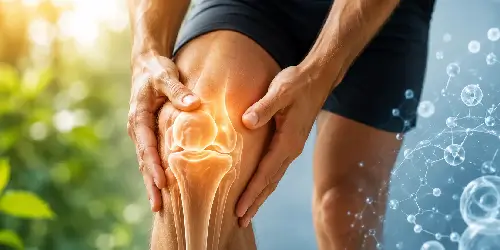
Regenerative Medicine on the Big Island of Hawaii
Ultrasound-guided orthobiologic care with Dr. Christopher Lawinski, MD
For people who have been told to manage the pain, wait for surgery, or learn to live with it.
Hawaii Island Stem Cell Therapy and Regenerative Medicine is a regenerative medicine practice on the Big Island of Hawaii, founded and led by Dr. Christopher Lawinski, MD, a board-certified integrative and holistic physician.
We offer ultrasound-guided orthobiologic injection for joint, tendon, ligament, and nerve-related concerns, and we have been doing this work on the island since 2015. Our primary clinic is in Pahoa, at the Vitality Integrative Medicine Clinic, and we see patients at satellite clinics in downtown Kailua-Kona and on Maui.
It may be, if any of these sound familiar:
A joint, tendon, or ligament has not recovered, and rest and rehabilitation have run their course
Surgery is not indicated, or has already been tried without lasting relief
The pain has outlasted the injury that caused it
You have been told there is nothing further to do
You have probably heard of PRP. This isn’t the standard version.
If a prescription was the only thing you were offered.
Taken from you in the morning. Back in you by lunch.
No harvest, no second appointment. Ready when you are.
That sudden shoulder pain may be a calcium deposit.
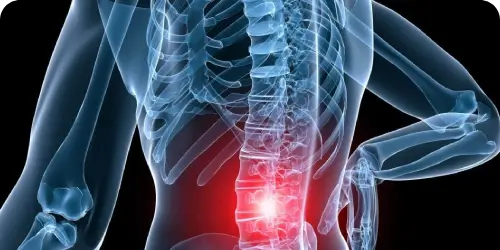
Past three months, back pain may not resolve on its own.
If cortisone didn’t touch it, the nerve may be the problem.
Where regenerative injection began, and still the simplest way in.
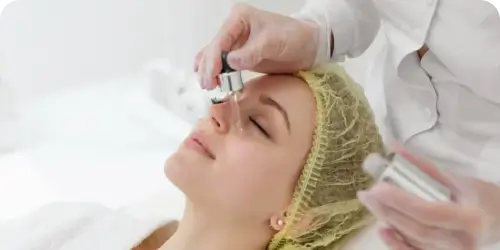
Fillers add volume. This asks your skin to rebuild its own.
Your platelets age with you. This doesn’t.
The question people wait years to ask.
Send us the imaging you already have. No charge, no obligation, and Dr. Lawinski reads it himself.
The sequence is familiar to anyone who has lived it.
A joint, tendon, or ligament does not recover — from an injury, or from the slow structural wear that accumulates over decades. The first response is symptom control, usually a non-steroidal anti-inflammatory, paired with conventional rehabilitation. When that does not resolve the problem, the conversation turns toward surgery. And when surgery is not indicated, or has already been tried without lasting relief, patients are frequently told the same thing: there is nothing further to do, learn to live with it, here is something for the pain.
Musculoskeletal pain has become common enough in modern life that most people quietly accept it as an inevitable consequence of getting older.
The reason is mechanical rather than mysterious.
Blood delivers the cells and nutrients that rebuild damaged tissue, and cartilage, ligament, and tendon receive comparatively little of it. Repair in those structures is slow, and it can stop before it finishes. Those same structures carry a dense nerve supply, which is why an unfinished repair so often leaves pain behind after the original injury has settled. And because everything in the musculoskeletal system is held in tension against everything else, a weak link in one place quietly loads the structures around it — which is how a bad ankle becomes a bad hip two years later.
Seen that way, a stalled recovery is not a failure of will or a verdict about your age. It is an unfinished repair in tissue that was never well supplied to begin with.
Regenerative medicine starts from a different premise than symptom management.
Rather than suppressing a signal or overriding a process, we place biologically active material into the tissue where repair has stalled, with the intent of restarting it. Platelets are the clearest illustration: they are your body’s own repair signal, the particles that gather at an injury and tell the surrounding tissue to rebuild. Concentrating them and placing them precisely amounts to amplifying a message your body is already trying to send.
The material can come from your own blood, from your own marrow or fat in the form of mesenchymal stem cells, or from prepared donor sources. Which one suits you is a real conversation, not a formality.
Material is only half of the equation. Where it goes is the other half.
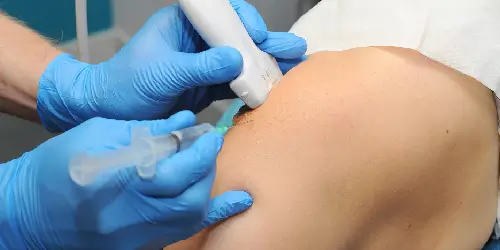
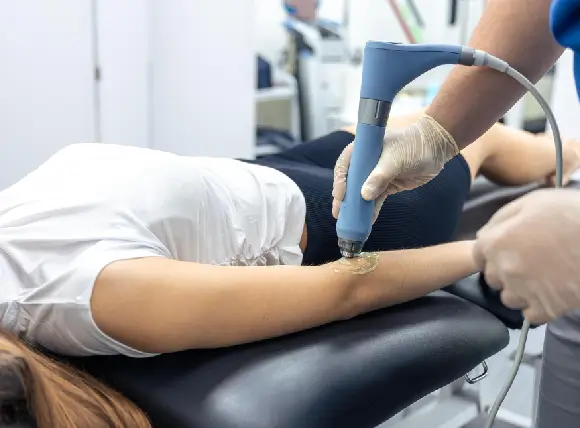
For the past six years, every injection here has been placed under ultrasound guidance. Dr. Lawinski watches the placement happen on screen, in real time, rather than judging position by feel and surface landmarks. The targets are not always large — a hip or a knee at one end of the range, a tendon sheath at the other.
It matters for a plain reason. Material that lands beside the structure instead of inside it does nothing at all, and you do not get a second attempt at a placement nobody could see.
Insurance does not currently cover the professional services offered here, which is precisely why we publish what things cost rather than making you call to find out.
PRIMARY CLINIC
At the Vitality Integrative Medicine Clinic, 15-3039 Pahoa Village Road, Pahoa, HI 96778. About forty-five minutes southeast of Hilo Airport.
SATELLITE CLINIC
Downtown Kailua-Kona.
SATELLITE CLINIC
Maui location.