
Combatting Ozempic Face with Dermal Fillers
How Fillers Can Restore Facial Volume and Confidence
The rise of powerful GLP-1 (semaglutide) weight-management medications such as Wegovy® (Ozempic®) and Zepbound® (Mounjaro®) has transformed the lives of many people, helping them achieve their weight loss goals and improve health. However, they have also brought with them a new cosmetic concern that is known as Ozempic face.
The term describes the quick and sometimes dramatic loss of facial volume, especially in the cheeks and temples, that can accompany rapid weight loss. The resulting hollow or gaunt appearance often leads patients to seek cosmetic treatments to restore their confidence and sense of self.
In this complete guide, we’ll explore what Ozempic face is, how dermal fillers can help, the different types of fillers available, and the importance of choosing a highly skilled medical professional for the injections.
We’ll also discuss the growing trend toward natural-looking results, making sure you look refreshed—not overdone—after treatment. At the end, we’ll answer the most common questions about dermal fillers for Ozempic face in a quick and useful Q&A section.
What Is Ozempic Face?
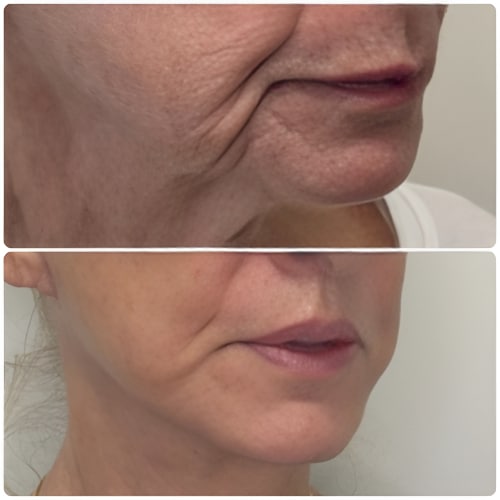
Ozempic face refers to the noticeable loss of facial fat and volume—particularly in the cheeks, under the eyes, and around the temples—that can occur as a side effect of rapid weight loss with GLP-1 agonist medications like Wegovy (Ozempic) or Zepbound (Mounjaro).
Although these medications are effective for controlling weight and optimizing metabolic health, the thinning of facial fat pads can result in a prematurely aged appearance, with more pronounced wrinkles, sagging skin, and sunken cheeks.
Why Does It Happen? When you lose weight quickly, the body tends to shed fat from all areas—including the face. Some people are genetically predisposed to lose facial fat more rapidly, bringing about a more dramatic transformation.
Since the skin doesn’t always rebound fully after significant fat loss, the face can look deflated or hollowed, especially in middle-aged and older patients whose skin elasticity has already begun to decline.
How Dermal Fillers Help Restore Facial Volume
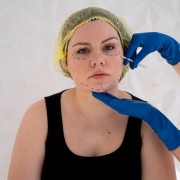
Dermal fillers are injectable cosmetic treatments designed to add volume, smooth wrinkles, and improve facial contours. For patients experiencing Ozempic face, fillers can help restore lost cheek volume, lift sagging skin, and rejuvenate the overall facial appearance.
Where Are Fillers Used on the Face?

- Cheeks (midface): Restoring volume here provides youthful contour and support.
- Temples: Filling hollow temples can soften the skeletal look that sometimes accompanies rapid weight loss.
- Under eyes (tear troughs): Carefully placed fillers can reduce the appearance of hollowness and dark circles.
- Jawline and chin: Fillers can softly reshape and support the lower face for a well-balanced profile.
The 4 Types of Dermal Fillers: Pros and Cons
There are several types of dermal fillers, each having its own properties, advantages, and disadvantages. The most common include hyaluronic acid (HA) fillers, calcium hydroxylapatite (CaHA), poly-L-lactic acid (PLLA), and autologous fat transfer. Let’s compare them:
Hyaluronic Acid (HA) Fillers
Examples: Juvederm®, Restylane®, Belotero®
Pros:
- Immediate results
- Reversible with hyaluronidase if necessary
- Wide variety of formulations for different facial areas
- Typically well-tolerated
Cons:
- Temporary (lasting 6–18 months depending on product and area)
- Rare risk of allergic reaction or vascular complications
Best for: Cheeks, tear troughs, lips, nasolabial folds, marionette lines
Calcium Hydroxylapatite (CaHA)
Example: Radiesse®
Pros:
- Provides both instant volume and long-term collagen stimulation
- Typically lasts longer than HA fillers (up to 12–18 months)
- Natural-looking results
Cons:
- Not reversible
- Best suited for deeper injections (not for under eyes or lips)
- Rare risk of nodule formation
Best for: Cheeks, jawline, nasolabial folds, hands
Poly-L-lactic Acid (PLLA)
Example: Sculptra®
Pros:
- Stimulates collagen production for gradual, natural-looking volume restoration
- Results can last up to two years
- Suitable for larger areas of volume loss
Cons:
- Results take several weeks to months to appear
- Requires a series of treatments
- Not suitable for zones needing precision or delicate contouring
Best for: Cheeks, temples, jawline, broader facial rejuvenation
Autologous Fat Transfer
Available only from a facial plastic surgeon
Pros:
- Uses your own fat (minimizing allergy risk)
- Can provide long-lasting, natural results
- Good for large volume restoration
Cons:
- Requires minor liposuction procedure to harvest fat
- Variable fat survival rates
- Longer downtime and higher cost
Best for: Cheeks, temples, broader facial volume
Why the Injector’s Skill and Expertise Matter
No matter which filler is used, the outcome depends heavily on the skill, training, and technique of the injector. Experience with facial anatomy is vital to ensure safe, precise placement and natural-looking results. Here’s why:
- Safety: Knowledge of facial arteries and nerves is essential to avoid rare but serious complications.
- Customization: A skilled, medically knowledgeable injector tailors the treatment to your unique facial structure, volume reduction patterns, and cosmetic objectives.
- Natural Results: Expert injectors know how to refrain from overfilling and create a subtle, refreshed look instead of an artificial or puffy appearance.
- Problem-Solving: Complications or asymmetries can be properly managed by experienced providers.
Why Choose a Facial Plastic Surgeon or Advanced Injector?
Providers with an extensive understanding of facial anatomy—such as facial plastic surgeons and other medically trained injectors—are especially well-equipped to deliver optimal results. They bring medical expertise and trained eyes, making certain that the restored volume blends with your natural features.
The Trend Toward Natural-Looking Results
In the past, overfilled cheeks and lips—sometimes called pillow face—were seen as status symbols. Today, the pendulum has swung toward subtlety. Most patients want to look like the best version of themselves, not like they’ve had work done. Achieving this means:
- Using the right amount and type of filler for your anatomy
- Layering treatments for gradual, believable rejuvenation
- Respecting natural contours and unique features
- Prioritizing facial balance and symmetry
A patient-centered injector will discuss your goals, analyze your facial structure, and create a customized plan that improves your appearance without looking artificial.
How Facial Filler Treatment Works

- Consultation: Your provider will assess your facial anatomy, discuss your concerns, and recommend the most suitable filler product.
- Treatment: Most fillers are injected with fine needles or cannulas. The procedure usually takes 30–60 minutes.
- Recovery: Mild swelling, bruising, or tenderness is common and usually resolves in a few days.
- Results: Depending on the filler, results may be immediate (HA, CaHA) or gradual (PLLA, fat transfer).
- Follow-up: You may need touch-ups or additional sessions for the best result.
Risks and Considerations
While dermal fillers are generally safe in professional hands, they’re not risk-free. Possible issues include:
- Bruising and swelling
- Infection (rare)
- Lumps or nodules
- Allergic reactions
- Vascular complications (extremely rare but serious)
Choosing an experienced and qualified injector with advanced medical and facial anatomy knowledge greatly reduces the chance of complications.
Facial Volume Loss Can be Treated with Fillers
Dermal fillers offer an effective treatment for patients dealing with Ozempic face – that is, facial volume loss after taking Wegovy or Zepbound.
If you have quickly lost weight and your facial appearance has been affected, talk to a qualified provider like a facial plastic surgeon to discuss injectable dermal fillers or other options that might be best for you.
If you’re in Oahu, Dr. Susan Tan at Hawaii Facial Plastic Surgery in Honolulu is a leading provider of dermal filler injections. You can reach her office at (808) 636-9084 to schedule an appointment.
Frequently Asked Questions
Q.1 How soon after starting Wegovy or Zepbound can I get fillers?
A.1. There’s no mandatory waiting period, but it’s best to wait until your weight stabilizes to avoid needing repeated adjustments.
Q.2. How long do results last?
A.2. HA fillers last 6–18 months; CaHA about 12–18 months; PLLA up to 2 years; fat transfer can be permanent, though touch-ups may be needed.
Q.3. Will fillers make me look unnatural?
A.3. Not when done by a skilled, conservative injector. The goal is to restore lost volume—not to overfill.
Q.4. Are dermal fillers safe?
A.4. Yes, when performed by medically trained professionals. Most side effects are mild and temporary.
Q.5. What if I don’t like the results?
A.5. HA fillers can be dissolved with an enzyme. Other fillers are not reversible but often fade over time.
Q.6. Can I combine fillers with other treatments?
A.6. Yes—fillers are often combined with neuromodulators (like Botox), skin tightening, or laser treatments for complete rejuvenation.
Q.7. How do I choose the right provider?
A.7. Look for board-certified facial plastic surgeons or medically trained and experienced providers with a track record of natural results and satisfied patients.